I’m Raksha - a UX Designer based out of Chicago.
I turn complex tools and information into intuitive digital experiences through UX, content strategy, and user-centered thinking.
Creating faster, more consistent BRDs with AI
AskTalia is an AI-powered colleague that transforms intake responses, uploaded documents, and meeting transcripts into structured, editable BRDs using team-specific templates.
My Role
UX Designer
Deliverables
Final Prototypes
Duration
June - July 2025

Prompt
How might we help marketers and product managers transform existing project context into consistent, high-quality BRDs while reducing manual effort and accelerating project scoping?
Starting Out...
Creating a Business Requirements Document was often a manual and inconsistent process. Product marketing managers had to gather information from meetings and source documents, identify the correct template, interpret intake responses, and write each section from scratch. Depending on the project, completing and finalizing a BRD could take several days or weeks.
Our team saw an opportunity to create a collaborative AI experience that could guide users through intake, infer context from existing materials, and generate a structured first draft for users to review and refine.
This led us to ask:
"How might we transform scattered project information into consistent, high-quality BRDs faster and with less manual effort?"
Discovery & user research
During discovery, we collaborated with teams across seven Microsoft marketing organizations to understand how they created BRDs, the templates they used, and where the manual process caused friction. Through stakeholder conversations, template reviews, workflow analysis, and user feedback, we identified recurring challenges:
Users struggled to begin documents from scratch, information was scattered across meetings and source materials, and finished BRDs varied in format, quality, and detail.
These findings shaped AskTalia’s guided conversational intake, team-specific templates, source-document uploads, real-time preview, and section-level editing capabilities.
Primary persona

Based on the research found in the discovery period of the project, we developed our primary persona: Maya Patel.
Maya Patel is a product marketing manager who already holds most of a project's context across briefs, transcripts, and stakeholder notes, but has no fast way to turn that scattered material into a complete, consistently structured BRD or to see what's still missing.
Maya’s findings revealed that the core problem was not a lack of project context, but the effort required to consolidate it into a structured BRD. Users needed an experience that could organize existing information, identify gaps, and accelerate drafting, while preserving their ability to review, edit, and control the final document.
Ideation
Based on our findings, we explored how AskTalia could help users transform scattered project information into a complete BRD without sacrificing accuracy or control. We prioritized a guided experience that could reuse existing context, identify missing information, and allow users to review and refine the document throughout the process.
The key features included:
-
Team-specific BRD templates
-
Source-document and transcript uploads
-
Guided, template-based questions
-
Suggested prompts and responses
-
Real-time BRD preview and progress tracking
-
Section-level editing and regeneration
-
Chat history, sharing, and export options
Wireframes


From there, we began translating our ideas into low-fidelity wireframes, focusing first on the structure and key actions of the AskTalia experience. We wanted users to immediately understand who Talia was and how she could support them, whether they needed to submit a new AI idea, register an existing project, build a BRD, learn more about the Gen AI COE, or get help with Responsible AI compliance. We also included an open text field so users could either select a suggested path or begin a conversation in their own words.
Maya’s findings revealed that the core problem was not a lack of project context, but the effort required to consolidate it into a structured BRD. Users needed an experience that could organize existing information, identify gaps, and accelerate drafting, while preserving their ability to review, edit, and control the final document.
Prototypes
As we moved into high-fidelity prototyping, we refined the layout to make the experience feel more intuitive, conversational, and aligned with the AskTalia brand. We introduced Talia’s chatbot identity, strengthened the visual hierarchy, and added supporting copy that explained how the tool could simplify issue reporting and document creation.
We also reorganized supporting resources into a persistent sidebar so they remained accessible without distracting from the primary actions.
Onboarding Experience:

In App Navigation:

Flash Card Feature:

Chat Feature:

Visual Look & Feel
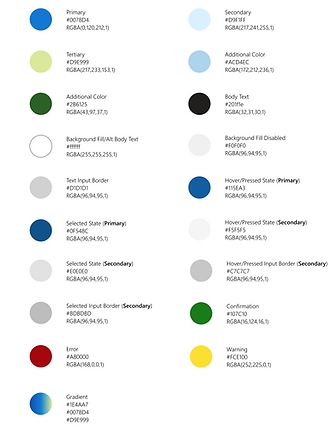
Colors:
Fonts:

The inspiration behind using Mandali as our font was because it has a clean look and because it's easily readable. Easily readable fonts results in an overall better design layout. We also thought this font matched well with the colors.
We found that the light teal shade sets a calming and tranquil mood to the overall design. The light purple pastel shade makes the app design pertain a relaxing feel to the overall app. We also used white because we wanted our design to have a minimalistic look.